

How Can Commercial Painting Create a Lasting Professional Finish?
Prepare Every Surface Carefully for Stronger Paint Adhesion
Select Durable Paint Products That Withstand Daily Business
Apply Proven Techniques That Produce Smooth Even Results
Choose Strategic Colors That Support Each Business Environment
Follow Simple Steps to Plan Commercial Painting Successfully
Step 1: Inspect the full project area
Step 2: Define timing and access needs
Step 3: Confirm products and colors
Step 4: Complete preparation before painting
Step 5: Inspect the finished surfaces
Maintain Painted Surfaces Regularly to Extend Their Lifespan
What preparation should happen before commercial painting begins?
Which paint finish works best in busy interior spaces?
How should exterior business surfaces be prepared for painting?
Why should businesses choose an experienced painting team?
How can I start a commercial painting project?
Protect Your Investment Through Better Painting Decisions Today
Commercial painting creates a lasting professional finish when preparation, product selection, application, and maintenance work together. Each step affects how the surface looks and performs. Therefore, a rushed process can lead to uneven color, peeling, stains, or early repainting. At Liberty Painting, we focus on the full process so businesses can get reliable results.
Prepare Every Surface Carefully for Stronger Paint Adhesion
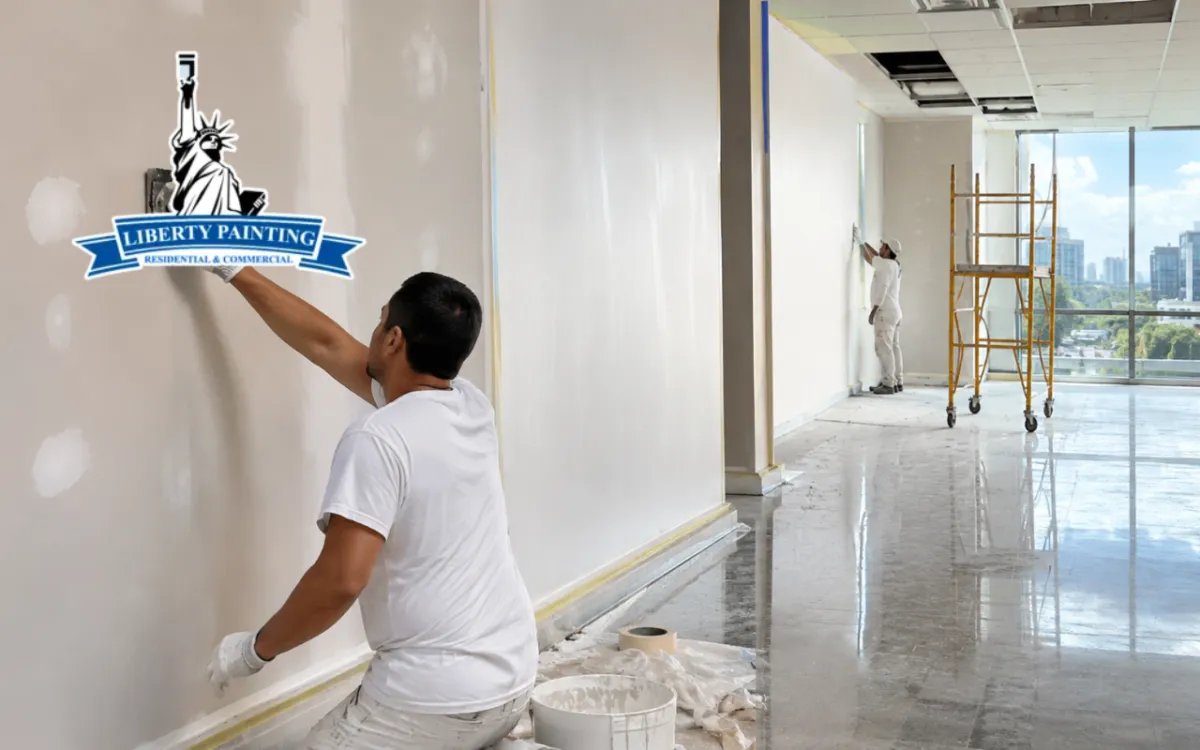
Good commercial painting preparation gives every coat a better base. First, surfaces should be checked for dust, grease, cracks, moisture, and loose paint. Next, damaged areas should be repaired before primer or paint is applied. This approach helps the new finish bond evenly and reduces future problems.
At Liberty Painting, we treat preparation as a key part of the job. For example, glossy areas may need sanding before painting. Likewise, holes and small cracks should be filled and smoothed. Metal may need rust treatment, while wood may require added repair or sealing.
Clean dirt, grease, dust, and other surface buildup.
Repair holes, cracks, loose material, and damaged areas.
Sand glossy or uneven sections for a smoother base.
Use the right primer for the surface and environment.
Protect floors, furniture, fixtures, and nearby work areas.
Businesses planning a larger update can review our complete property painting options before deciding which areas need attention.
Select Durable Paint Products That Withstand Daily Business
Commercial paint durability depends on the product, finish, surface, and level of daily use. Therefore, high-traffic areas usually need tougher finishes than quiet rooms. Washable and scrub-resistant products can work well where walls need regular cleaning. Meanwhile, moisture-resistant choices can better support humid spaces.
Acrylic latex paint is often practical for many walls because it combines durability with easier cleanup. However, floors and some metal surfaces may need stronger coating systems. The right choice depends on traffic, cleaning, moisture, light, and the condition of the surface.
Match the paint type to the surface material.
Choose washable finishes for busy interior areas.
Consider moisture exposure before selecting a product.
Use stronger coatings where abrasion happens often.
Test samples when appearance and lighting are important.
For indoor spaces, our interior painting solutions for business spaces explain how we approach walls, ceilings, trim, doors, and other surfaces.
Apply Proven Techniques That Produce Smooth Even Results
Even premium paint can look poor when application is inconsistent. Therefore, painters need the right brush, roller, or sprayer for each surface. A roller nap that is too thick can leave unwanted texture. Likewise, poor spray control can create uneven coverage or overspray.
Working in planned sections also matters. Painters should maintain a wet edge so fresh paint blends smoothly. When spraying large walls, back-rolling can help level the coating. In addition, working from top to bottom makes drips easier to catch before they dry.
At Liberty Painting, we value clean lines, steady coverage, and tidy work areas. These habits help commercial painting services produce a more polished result while reducing avoidable corrections later.
Choose Strategic Colors That Support Each Business Environment
Color can shape how a room feels and how people experience a business. For example, warm colors may add energy to active spaces. Meanwhile, cooler tones can create a calmer setting. Neutral colors also remain useful because they support many furniture styles, signs, and brand elements.
However, color should never be chosen from a small chip alone. Natural light, fluorescent lighting, and LEDs can change how a shade appears. Therefore, testing samples in the actual space helps avoid surprises.
Use brand colors with purpose instead of covering every wall.
Balance bold accents with calmer background tones.
Check samples under daytime and evening lighting.
Consider how customers and employees use each room.
Match sheen with both appearance and cleaning needs.
For outside areas, our exterior surface painting and protection page shows how exterior work can refresh and protect a property.
Follow Simple Steps to Plan Commercial Painting Successfully
A clear plan can limit downtime and make the project easier to manage. Moreover, it helps building managers, employees, tenants, and painters understand what happens next.
Step 1: Inspect the full project area
Start by checking walls, ceilings, trim, doors, exterior surfaces, and access points. Also note repairs, stains, moisture, and damaged finishes.
Step 2: Define timing and access needs
Next, identify business hours, busy periods, drying time, and areas that must remain open. Then create a work sequence around those needs.
Step 3: Confirm products and colors
Afterward, match each paint or coating to the surface and expected traffic. Test colors in the real lighting before making the final choice.
Step 4: Complete preparation before painting
Then clean, repair, sand, prime, and protect the work area. Proper preparation helps the finish look smoother and last longer.
Step 5: Inspect the finished surfaces
Finally, review coverage, edges, color consistency, and touch-up areas. At Liberty Painting, we believe a careful final check supports a cleaner handoff.
If your business needs a project review, you can consult our team.
Maintain Painted Surfaces Regularly to Extend Their Lifespan
Maintenance protects both appearance and commercial paint durability. First, remove dirt and scuffs before they build up. Use gentle cleaners that match the finish. Also, avoid rough tools that can scratch or dull painted surfaces.
Regular inspections can catch peeling, stains, moisture marks, or impact damage early. As a result, small touch-ups may prevent a larger repaint. Keep leftover paint labeled when possible so future repairs match more closely.
At Liberty Painting, we also encourage property teams to track painted areas and maintenance needs. Our painting care tips and helpful guides provide additional information for keeping finished spaces in better condition.
Frequently Asked Questions
What preparation should happen before commercial painting begins?
Surfaces should be cleaned, repaired, sanded when needed, and checked for moisture or loose material. Primer may also be needed. For a broader look at our process, explore our full painting service overview.
Which paint finish works best in busy interior spaces?
Satin or other washable finishes can suit many high-use areas because cleaning is easier. However, the best choice depends on the surface. See our interior finish and color options for related service details.
How should exterior business surfaces be prepared for painting?
Exterior surfaces should be cleaned and checked for peeling, cracks, moisture damage, and failed coatings. Repairs should come before new paint. Review our exterior painting process and service details for more information.
Why should businesses choose an experienced painting team?
Experience supports better planning, safer work habits, clearer communication, and more consistent finishes. With Liberty Painting, you work with a licensed and insured team with over 15 years of experience. Learn more about our experienced painting team.
How can I start a commercial painting project?
Begin by defining the areas, timing, surface conditions, and finish goals. Then discuss the project with a professional team. When you are ready, connect with us.
Protect Your Investment Through Better Painting Decisions Today
Successful commercial painting combines preparation, durable products, careful application, smart color choices, and regular maintenance. Therefore, each decision should support both appearance and daily use. At Liberty Painting, we approach every project with clear planning and attention to detail. With the right process, your business can enjoy cleaner surfaces, stronger finishes, and a professional look that lasts.
References:
The Importance of Paint Preparation — This Old House
Color Palettes to Try According to Color Psychology — Architectural Digest
