

What Helps You Learn How To Choose Paint Primer?
A smooth paint job starts before the first color coat. At Liberty Painting, we help homeowners choose the right primer, prepare each wall, and build a finish that looks clean for years.
What Helps You Learn How To Choose Paint Primer?
The best answer is simple. You learn how to choose paint primer by checking the surface first. Then, you match the primer to the wall, stain, color, and room use. This step helps paint stick better, cover evenly, and last longer.
Protect Your Walls With A Strong Primer Base
At Liberty Painting, we see primer as the first layer of trust. It helps the paint bond to the wall. Also, it can hide stains, marks, and small color changes.
Primer is useful when walls are new, patched, glossy, stained, or very dark. Therefore, knowing when to use paint primer can prevent peeling and uneven color.
Apply primer on bare drywall before painting.
Choose primer over dark colors before light paint.
Add primer on patched or repaired wall areas.
Use primer when stains may show through paint.
At Liberty Painting, we use this step to give walls a clean base. As a result, the final color looks smoother and more even.
Compare Primer Types Before Starting Your Room Project
Different primers solve different wall problems. So, the right choice depends on the surface and room condition.
Latex primer is a common choice for many indoor walls. It dries fast and works well with many water-based paints. Oil-based primer can help block stains on wood or older surfaces. Shellac primer can seal strong stains and odors.
For many homes, primer for drywall and walls should seal the surface well. Also, it should help the paint spread evenly.
Use drywall primer for new drywall.
Apply stain-blocking primer for marks or smoke stains.
Go with bonding primer for glossy painted areas.
Choose moisture-resistant primer for damp rooms.
We review these details before painting. Therefore, each room gets a primer that fits its real needs.
Match Each Surface To The Correct Primer Choice
Walls, wood, metal, brick, and cabinets do not need the same primer. Each surface reacts to paint in a different way.
Drywall soaks up paint fast. So, drywall primer helps seal the paper and joint compound. Wood may need a stain-sealing primer. Metal may need a rust-blocking primer. Brick may need a masonry primer.
When you ask how to choose paint primer, start with one question. What surface are you painting today?
At Liberty Painting, we never treat every surface the same. Instead, we prepare each area with the correct product and method.
Choose Primer Shades That Improve Final Paint Color
Primer color can change the final look of your paint. White primer works well under many light shades. However, gray primer often helps deep colors cover better.
A tinted primer can reduce the number of paint coats needed. Also, it can help bold colors look richer. This is helpful when changing from light walls to dark walls.
Before large projects, we may test a small wall area. This helps confirm the color under real room light.
Prepare Drywall Carefully For A Cleaner Paint Finish
Fresh drywall needs special care. The paper, seams, and joint compound can absorb paint unevenly. Therefore, primer helps create one steady surface.
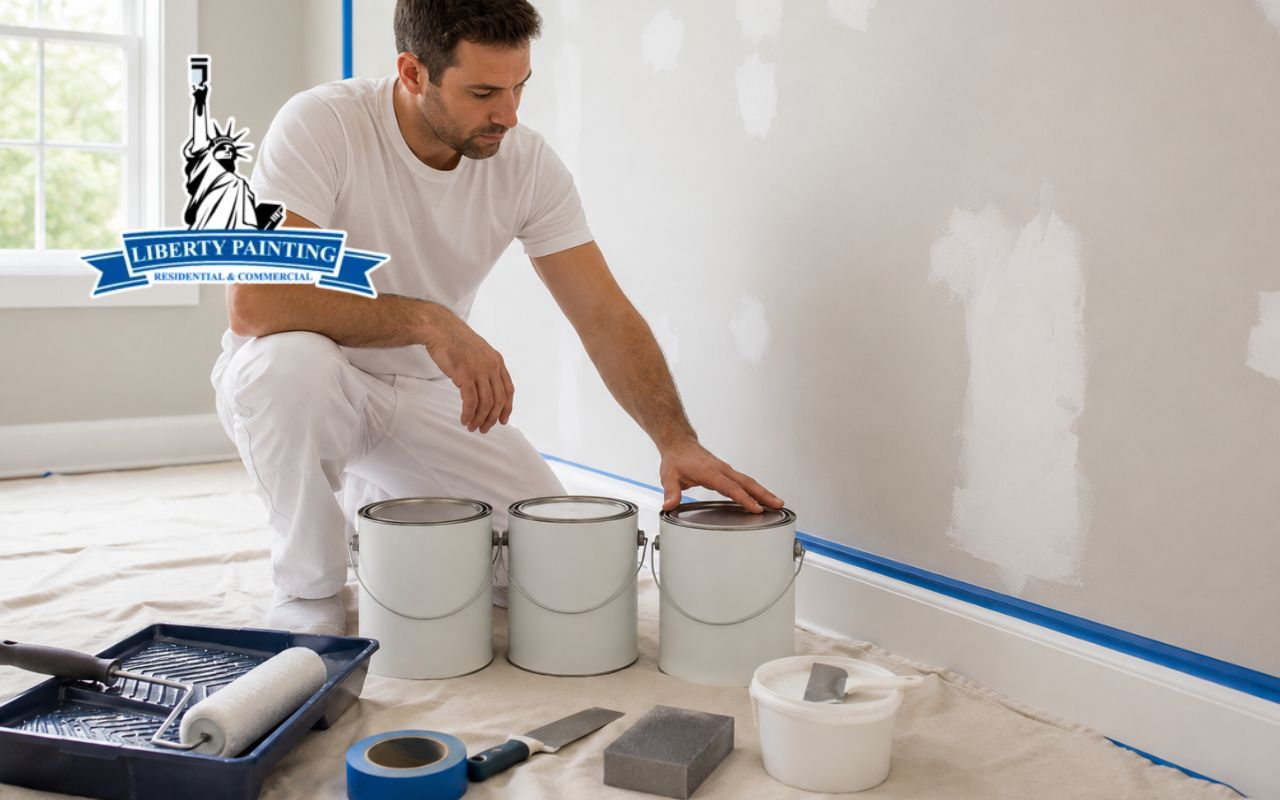
Before priming drywall, clean dust from the wall. Then, check repairs, nail spots, and seams. Smooth areas should feel even before primer goes on.
Remove dust with a soft cloth or vacuum.
Patch holes, dents, and small cracks.
Sand rough areas until they feel smooth.
Apply primer in thin, even coats.
For damaged walls, our team can help with smooth wall repair help. Also, our blog shares a guide to fixing drywall holes for simple wall concerns.
Apply Primer Correctly For Smooth Lasting Results
Good primer still needs careful application. First, stir the primer well. Next, cut in around edges, trim, and corners. Then, roll the open wall areas with steady pressure.
Keep each coat thin and even. Also, follow the label for dry time. If needed, lightly sand small raised spots before painting.
This is one way our team keeps projects clean and steady. It also helps us deliver strong results for interior painting services in Washington DC.
How To Prime A Wall Before Painting
Clean the wall and remove dust or grease.
Repair holes, cracks, and damaged drywall.
Sand patched areas until they feel smooth.
Tape trim, floors, and nearby surfaces.
Brush primer around edges and corners.
Roll primer across the main wall area.
Let the primer dry before painting.
For full room help, visit our professional interior painting support. You can also explore our Washington DC room painting for local service details.
Avoid Common Primer Errors During Home Painting
Many primer problems start with rushed prep. Dirty walls, loose dust, and wet patches can stop primer from bonding. Also, thick coats may dry slowly and leave marks.
Do not skip primer on bare drywall. Also, do not use the same primer for every surface. When in doubt, ask a painting team before buying products.
At Liberty Painting, we help homeowners understand how to choose paint primer without confusion. We keep the process simple, clean, and practical.
Frequently Asked Questions
When should I use primer before painting?
Use primer on bare drywall, patched walls, stains, glossy paint, or major color changes. For room planning, our painting service tips can help you prepare.
Do repaired drywall areas need primer?
Yes. Repaired drywall often absorbs paint differently than the rest of the wall. Our smooth wall repair help can make patched areas blend better.
Can primer help dark paint cover better?
Yes. A tinted or gray primer can help deep colors cover more evenly. It may also reduce the number of paint coats needed. For more wall color and prep guidance, explore our painting service tips.
Can your team help with interior wall painting?
Yes. We can help with prep, primer, and finish coats. Learn more through our professional interior painting support.
How can I ask Liberty Painting for an estimate?
You can reach us through our contact page. Share your room needs, condition, and project goals.
Build Better Rooms With Proper Primer Planning
Learning how to choose paint primer helps every painting project start stronger. It protects walls, improves color, and supports a longer-lasting finish.
At Liberty Painting, we take primer seriously because prep affects the final result. Whether you need one room or a full home update, we can help you move forward with confidence.
References:
Interior Paint: A Guide to Buying the Best Paints for Your Home
