

Why Does Paint Bubbling On Walls Keep Happening?
Paint bubbles can make a clean room feel unfinished. However, they often point to a fixable wall issue. At Liberty Painting, we see this problem when moisture, poor prep, or weak paint breaks the bond. This guide explains simple steps, clear warning signs, and when expert repair is the safer choice.
Why Does Paint Bubbling On Walls Keep Happening?
Paint bubbling on walls happens when paint lifts away from the surface. Usually, the wall is damp, dirty, too hot, or poorly primed. Therefore, the best answer is simple. Find the cause first, repair the surface, prime it well, and repaint only when the wall is fully dry.
Identify Common Causes Before Repairs Start At Home
The main causes of paint bubbling often begin below the topcoat. As a result, repainting alone may not solve the issue.
Moisture can sit behind paint after leaks or high humidity.
Dust, grease, or old paint can block a strong bond.
Heat can dry paint too fast and trap air.
Low-quality paint may separate under stress.
Skipping primer can leave patches weak and uneven.
At Liberty Painting, we always look for the reason before we paint again. This helps protect your wall for longer. Also, it keeps paint bubbling on walls from coming back too soon.
Inspect Wall Damage Before Choosing Your Next Step
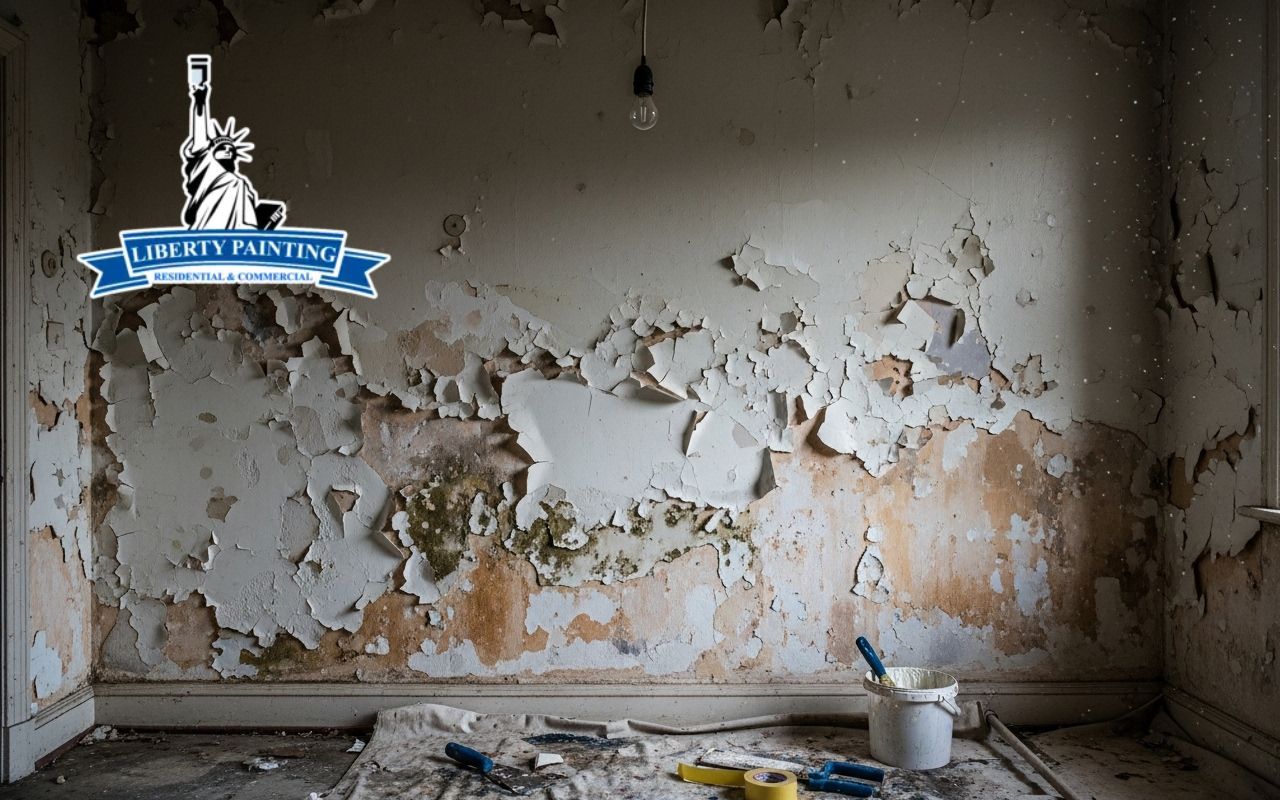
Start with a slow visual check. Then, look at the wall in bright light. Small bubbles may be a surface problem. However, soft spots can mean deeper damage.
Press the area gently with your finger. If it feels loose, the paint has lost grip. Also, check for stains, peeling edges, or dark marks. These signs may point to moisture.
If the drywall feels soft, visit our moisture damage guide. It explains why water can harm walls. For larger damage, our wall repair solutions may be the better path.
Gather Simple Tools For A Cleaner Repair Process
Good preparation makes the job easier. Therefore, gather everything before you start. This also helps you avoid rushed steps.
Paint scraper or putty knife
Utility knife for careful edge cuts
Medium-grit and fine-grit sandpaper
Spackling compound or patching plaster
Bonding primer for better grip
Interior paint that matches the wall
Drop cloths, tape, mask, and gloves
At Liberty Painting, we prefer clean tools and steady work. In addition, we use the right primer for each surface. This helps prevent weak spots after repairs.
Prepare Your Room For Smooth Painting Results
Move furniture away from the wall. Then, cover floors with drop cloths. This keeps dust and chips from spreading.
Next, wash the surface with mild soap and water. Rinse it well. After that, let it dry completely. Never paint over damp walls.
Use painter’s tape around trim and nearby edges. Also, open a window when possible. Fresh airflow helps the area dry better. For full room updates, explore our interior painting care.
Remove Loose Paint Without Damaging The Surface
Use a utility knife to score around each blister. Then, lift loose paint with a scraper. Work slowly, so solid paint stays in place.
After the bubbles are gone, sand the edges. This creates a smooth blend between bare wall and old paint. Then, wipe away dust with a damp cloth.
This step is key when learning how to fix bubbling paint. If loose edges remain, the new coat may fail. Therefore, take your time before patching.
Repair Hidden Issues Before Primer Touches Walls
Fill dents, gouges, and small holes with patching compound. Then, smooth the filler with a putty knife. Let it dry fully before sanding.
If you see mold or moisture, stop before painting. First, fix the water source. Then, clean the affected area safely. Otherwise, paint bubbling on walls may return.
Large soft areas may need professional help. At Liberty Painting, we handle drywall repair services in Arlington VA with careful prep. Our team can repair damaged sections before any finish coat begins.
Apply Quality Primer For Better Paint Adhesion
Primer helps seal the wall. Also, it gives paint a stronger surface to hold. This step matters after scraping and patching.
Use a bonding primer on patched areas.
Utilize a stain-blocking primer on dark marks.
Apply thin, even coats.
Let primer dry before painting.
At Liberty Painting, we do not rush primer. Instead, we let it seal the repair. As a result, the final color looks smoother and lasts longer.
Repaint Carefully For A Seamless Wall Finish
Stir the paint well before use. Then, cut in around edges with an angled brush. After that, use a roller for open wall areas.
Apply the first coat in even strokes. Also, keep a wet edge to avoid marks. Let the coat dry fully before adding another one.
A second coat usually gives better coverage. However, avoid thick layers. Thick paint can trap moisture and air. That can start paint bubbling on walls again.
For homes in Arlington, our Arlington room painting team can help create a clean finish.
Contact Skilled Help When Damage Spreads Fast
Some wall issues need more than a scraper and paint. For example, recurring bubbles may mean hidden moisture. Also, large drywall damage can spread if ignored.
At Liberty Painting, we can inspect the wall and recommend the next step. We can repair damaged drywall, prime the surface, and repaint with care. When the project feels too large,request a wall estimate.
We are ready to help when your wall needs more than a quick patch. In addition, our team can guide you through repair and repainting options.
Frequently Asked Questions
What are the main causes of paint bubbling?
The main causes include moisture, dirt, heat, poor primer, and weak surface prep. If water is involved, review our moisture damage guide before repainting.
Can I repair small wall bubbles myself?
Yes, small bubbles can often be scraped, sanded, primed, and repainted. For deeper wall damage, visit our wall repair solutions.
When should I call a painting team?
Call a team when bubbles keep returning, spread fast, or appear near stains. You can request a wall estimate for support.
Does interior painting help after drywall repair?
Yes, fresh paint can finish the repair after the surface is stable. Our interior painting care explains more.
Do you answer common service questions online?
Yes, we share answers about our process and services. You can read our service questions answered page.
References:
