

Why Is Power Washing Before Painting Important for Your House?
Clean Exterior Surfaces First for Stronger Paint Adhesion
Match Washing Methods Carefully With Each Exterior Material
Prepare Your Property Carefully Before Exterior Washing Begins
Follow These Washing Steps for Better Painting Preparation
Remove Mold and Stubborn Grime Without Surface Damage
Allow Clean Surfaces Enough Time to Dry Completely
Select Suitable Primer and Paint for Prepared Exteriors
Protect Your Finished Exterior Through Regular Surface Maintenance
Should I pressure wash my house before painting?
How long should exterior walls dry after washing?
Can pressure washing damage siding or exterior wood?
Power washing before painting removes dirt, mildew, chalky residue, and loose material that can interfere with paint adhesion. Therefore, fresh paint can bond directly to a cleaner surface. Proper washing also reveals damaged areas that may need repairs. As a result, the entire exterior painting process starts with a stronger and more reliable foundation.
Clean Exterior Surfaces First for Stronger Paint Adhesion
Exterior walls collect dirt, pollen, mildew, and other buildup over time. Therefore, painting directly over these materials can weaken the new coating.
Proper exterior surface cleaning before paint removes that unwanted layer. As a result, primer and paint can reach the actual surface more evenly.
At Liberty Painting, we consider cleaning an important part of exterior preparation. Moreover, we inspect the surface before deciding which cleaning approach makes sense.
Dirt can create a weak layer beneath fresh paint.
Mildew may remain visible if it is not removed properly.
Loose paint can prevent a smooth and stable finish.
Chalky residue can reduce how well new coatings bond.
For additional preparation details, review our complete exterior preparation guide before starting your project.
Match Washing Methods Carefully With Each Exterior Material
Different exterior materials need different cleaning methods. Therefore, pressure washing before painting should never mean using maximum pressure everywhere.
Wood, stucco, vinyl, brick, and other surfaces respond differently to water pressure. Consequently, the setting and spray pattern should match the material.
At Liberty Painting, we focus on removing buildup without creating new surface damage. In addition, we consider the age and condition of the exterior.
Wood usually needs lower pressure and careful spray control.
Vinyl siding requires care around joints and panel edges.
Stucco needs gentle cleaning around cracks and weak areas.
Sound masonry may tolerate stronger cleaning than softer materials.
Homeowners planning a complete exterior update can explore our professional exterior painting services for more information.
Prepare Your Property Carefully Before Exterior Washing Begins
Good preparation should happen before the pressure washer starts. First, remove furniture, decorations, and movable plants near the walls.
Next, protect lights, electrical outlets, and other sensitive areas from direct water. Additionally, close windows and inspect nearby openings.
Exterior painting preparation services should also include a careful look at the existing coating. Peeling paint, damaged wood, and failed caulk may need attention.
Move outdoor furniture away from the work area.
Protect electrical fixtures and vulnerable openings.
Check siding and trim for visible damage.
Identify loose or peeling paint before cleaning.
At Liberty Painting, we use this inspection to understand what the exterior needs next. If peeling is already present, read our solutions for peeling exterior paint for common causes.
Follow These Washing Steps for Better Painting Preparation
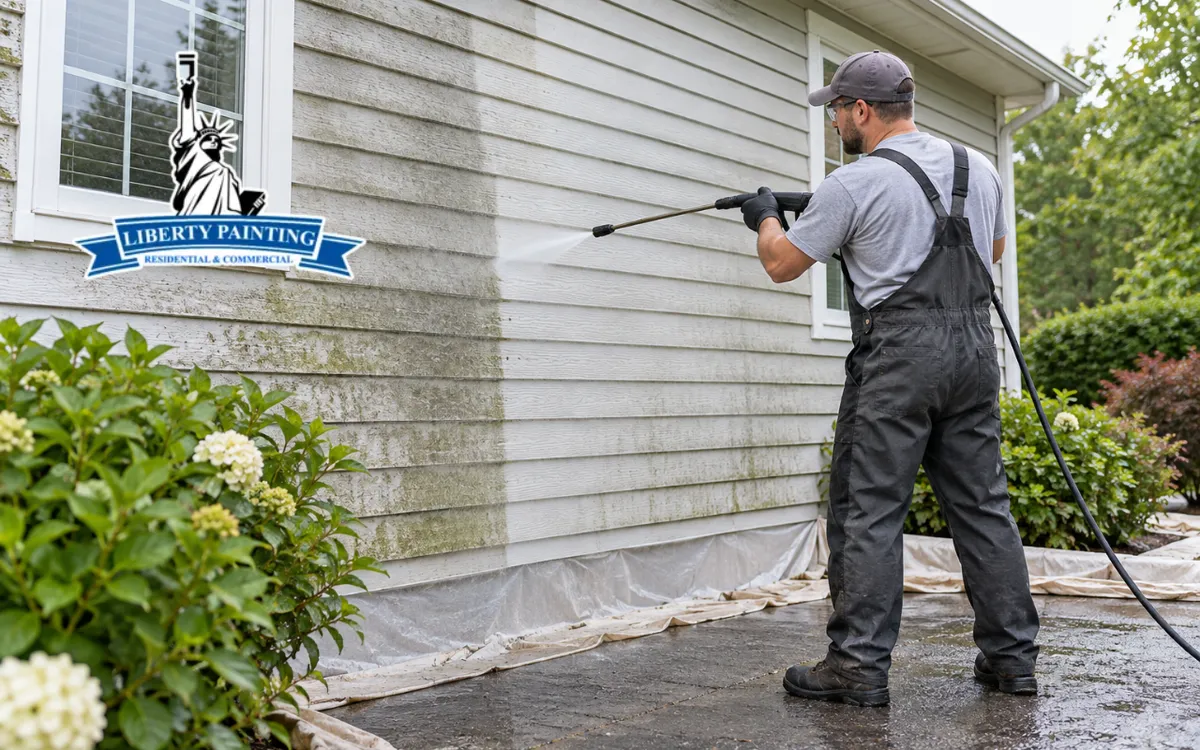
A careful washing process can improve results while reducing the risk of surface damage. Therefore, always begin with a small test area.
First, inspect the exterior for damage and weak sections.
Next, test a gentle setting in a hidden area.
Then, keep the spray moving across the surface.
Afterward, clean manageable sections with steady passes.
Finally, rinse away loosened dirt and cleaning residue.
Moreover, avoid holding the spray over one area for too long. Excessive force can mark wood, damage siding, or push water into openings.
At Liberty Painting, we prefer controlled cleaning instead of unnecessary pressure. Therefore, power washing before painting should clean the exterior without harming it.
Remove Mold and Stubborn Grime Without Surface Damage
Mildew and stubborn grime may require more than water alone. Therefore, a suitable exterior cleaner can help loosen organic buildup before rinsing.
Always follow the product directions carefully. Moreover, protect nearby plants and surfaces before applying any cleaning solution.
For difficult areas, gentle brushing may help before the final rinse. However, stronger pressure is not always the safest solution.
At Liberty Painting, we want unwanted growth removed before new coatings are applied. Covering mildew without proper treatment can leave an unresolved problem beneath the paint.
For related exterior protection information, see our guidance on mold-resistant finishes.
Allow Clean Surfaces Enough Time to Dry Completely
Cleaning is only part of the preparation process. After power washing before painting, the exterior must dry before primer or paint is applied.
Otherwise, moisture may remain beneath the coating. Consequently, that trapped moisture can contribute to bubbling, peeling, or other finish problems.
Drying time depends on the surface, weather, shade, and humidity. Therefore, avoid relying on one fixed drying period for every project.
Once the surface is dry, inspect it again. Cleaning often makes cracks, damaged wood, failed caulk, and remaining loose paint easier to see.
At Liberty Painting, we use this stage to identify areas that need repairs or additional preparation before painting continues.
Select Suitable Primer and Paint for Prepared Exteriors
A clean and dry surface creates a better starting point. However, the primer and paint must also match the exterior material.
Bare areas may need primer before the finish coats begin. Likewise, repaired sections often require additional preparation for a consistent result.
Moreover, the final exterior coating should suit the material and expected weather exposure. Good products and proper preparation work together.
Pressure washing before painting cannot replace repairs, sanding, or priming when those steps are needed. Instead, it supports the complete preparation process.
For more practical exterior guidance, explore our exterior painting tips and advice.
Protect Your Finished Exterior Through Regular Surface Maintenance
Exterior care should continue after the painting project is complete. Therefore, inspect painted areas regularly for dirt, mildew, cracks, and peeling.
Small problems are usually easier to address before they spread. In addition, gentle cleaning can help maintain the appearance of the coating.
At Liberty Painting, we believe successful exterior painting begins with preparation and continues with proper care. That approach helps protect both appearance and performance.
When you want professional guidance for your exterior project, request a painting consultation with our team. We can review the surface and explain the preparation your home may need.
Frequently Asked Questions
Should I pressure wash my house before painting?
In many cases, yes. Cleaning removes dirt and buildup that can interfere with paint adhesion. However, the cleaning method should match the surface. Our complete exterior preparation guide explains the broader preparation process.
How long should exterior walls dry after washing?
Drying time depends on weather, humidity, shade, and the exterior material. Therefore, painting should begin only after the surface is fully dry. Learn more through our professional exterior painting services.
Can pressure washing damage siding or exterior wood?
Yes. Excessive pressure can mark wood, damage siding, or force water into vulnerable openings. Therefore, controlled cleaning matters. Our complete exterior preparation guide covers additional preparation considerations.
Should mildew be removed before applying exterior paint?
Yes. Mildew should be treated and removed instead of being covered with fresh paint. Otherwise, the underlying problem may remain. Read our guidance on mold-resistant finishes for related information.
What should I do when exterior paint keeps peeling?
First, identify possible moisture, adhesion, or preparation problems. Then, correct the cause before repainting the area. Our solutions for peeling exterior paint explain several common causes.
References:
How to Pressure Wash a House — Popular Mechanics
5 Tips to Know Before Painting Your House — Architectural Digest
